

At first, I wasn’t even sure about writing my take on Greta Gerwig’s highly-anticipated pink-gasmic Barbie, starring two-time Academy Award nominee Margot Robbie as the titular doll, but the more I think about it, the more I find personal reactions, revelations, and ruminations—so I might as well just write the darn review!
I. Love. It.
I was entertained, wowed, and moved. I’ve decided that, at this point in my life, I want to invest my time in entertainment that will uplift me, so before I go into further detail, I highly recommend Barbie to anyone whose interest is peaked by the trailers, interviews, and headlines surrounding the doll who can be anything and is everything.
Let’s break this down!
A warning: Audiences must go into this film prepared for political commentary, not only regarding society’s view of Mattel’s legendary doll setting unrealistic beauty standards, but of the ever-present distortion of power among the genders—this is not meant to be a spoiler, but if you are unfamiliar with the relevant themes of Gerwig’s previously acclaimed works (Little Women, Lady Bird), then you’re in for what could be a rude awakening. Rather than shoving one gender-norm-trope after another in each scene, Gerwig aims to volley the magic of Barbie with some intelligent reminders that within one’s boundless imagination, we can find the courage to address what ails us in the “real world” and pushes us into such escapism. This applies to more than young girls questioning their power, but also to anyone who has been silenced by a greater force.
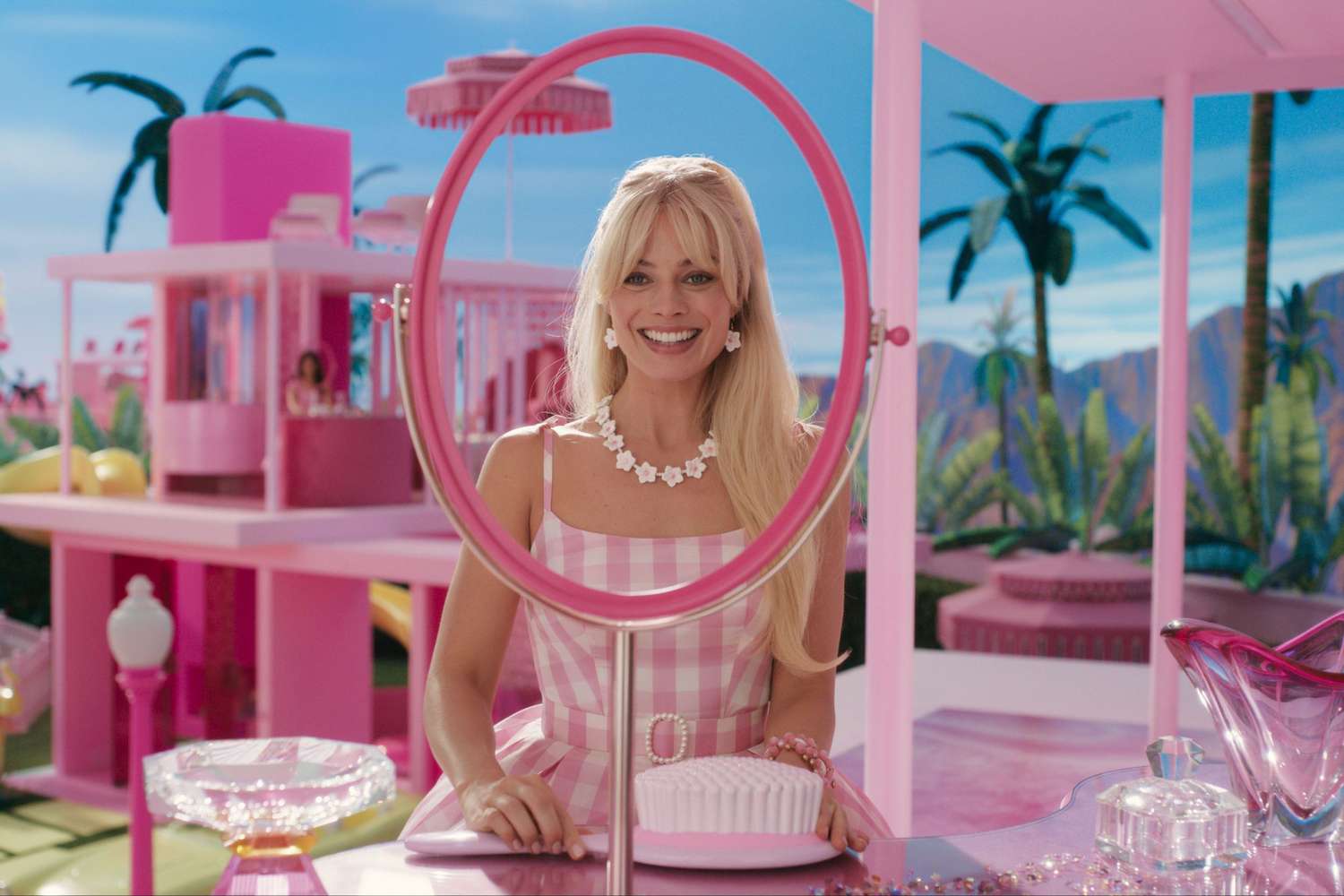
Anyway… In this film, Robbie’s Barbie, who begins as charming and perfectly as we expect from a stereotypical Barbie, is headed for a crash course in patriarchy with a splash of existentialism. Overall, Robbie’s performance is impeccable with a welcome dose of innocence that inspires audiences to view the opening Barbieland act through the lens of the doll’s youthful demographic. It’s all eye candy and the good feels. Obviously, play is meant to be fun and doesn’t always make sense—it shouldn’t; however, it allows us to reflect on our own desires and identities, which incites Barbie’s adventure ahead.
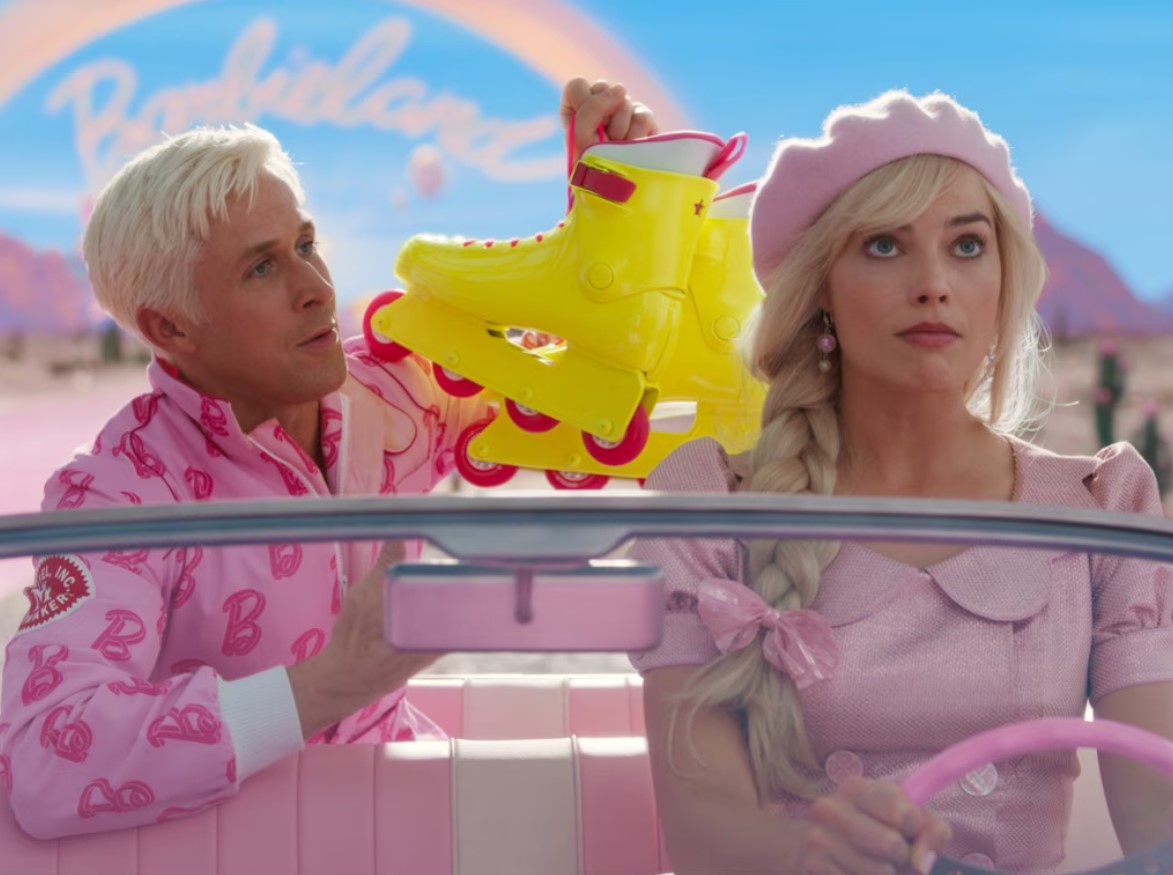
Dually, Ryan Gosling’s much-hyped portrayal of Ken delivers an uncanny and unexpected combination of physical comedy and hilarious passion with precision, stealing nearly every scene he’s in. Lest we forget Gosling’s comic prowess in films like Crazy, Stupid, Love and the oft forgotten The Nice Guys, among his filmography of brooding leading men or action heroes. Additionally, Gosling takes center stage in his rendition of “Just Ken,” a power ballad that encompasses the ignored complexities of being a purposeless trophy.
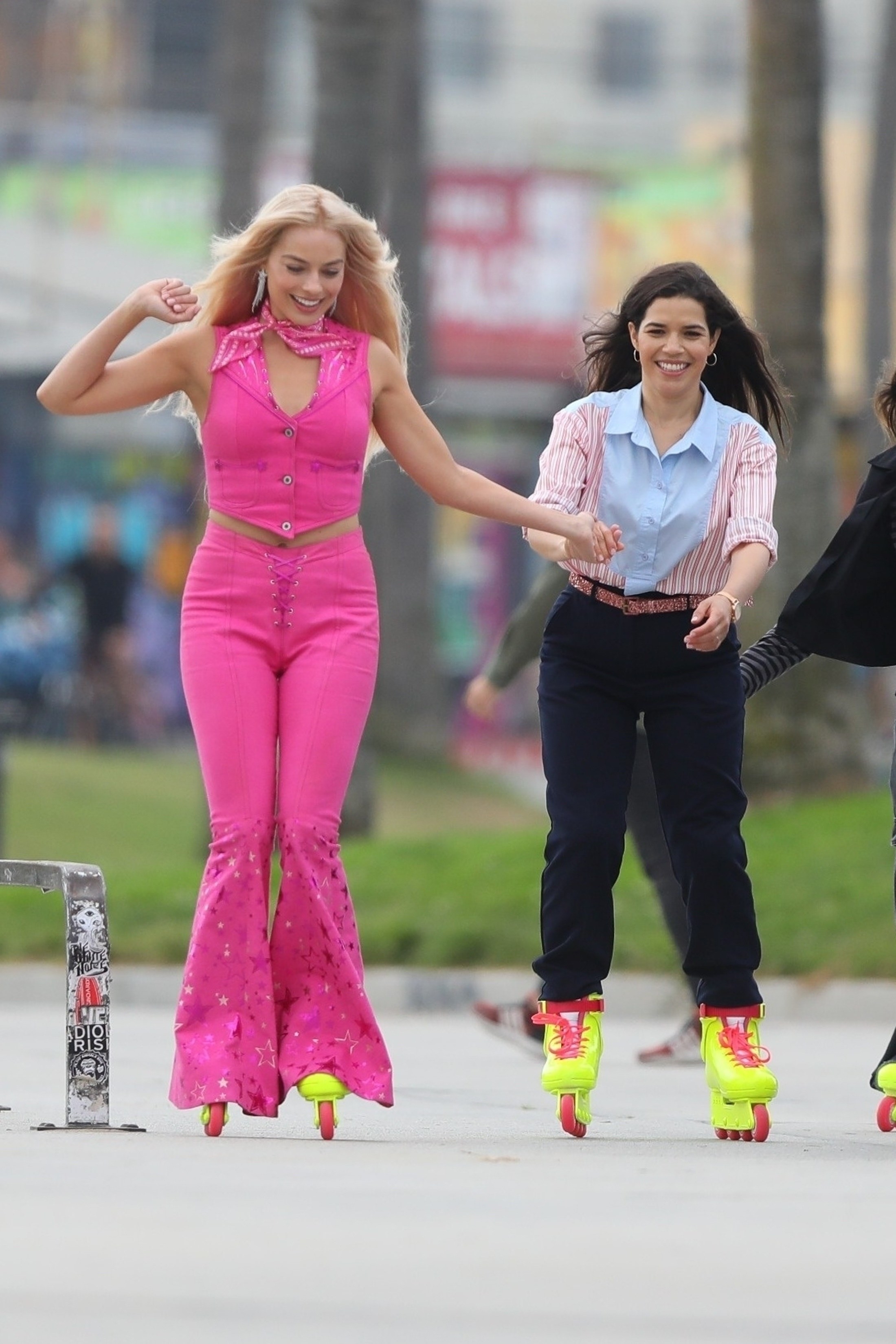
However, my favorite performance of the whole film is from America Ferrera as Gloria, the real-life corporate assistant and struggling mother, who is severely underused and deserves a much heavier presence in the film. While Ferrera offers humor in well-timed moments, especially when encountering a fish-out-of-water Barbie in Los Angeles, it’s the Emmy-winner’s evocative monologues that inspire and empower. As the most significant human character, I wanted to know more about her and champion her journey, along with Barbie’s own plight, when confronted by her disillusioned daughter Sasha, played by Ariana Greenblatt. Not to mention, it’s been too long since Ferrera has set the silver screen aglow, and it just feels right!

Furthermore, the supporting cast is a collection of refreshing faces that support the diversity that Barbie represents today and adds to the mischief and fun that ensues in both Barbieland and the real world, including Insecure star Issa Rae as a sassy President Barbie; Death on the Nile actress Emma Mackey as a Physicist Barbie; Saturday Night Live alum Kate McKinnon, perfectly cast as the “weird Barbie” we all had; X-Men: Dark Phoenix’s Alexandra Shipp as Writer Barbie; transgender actress from Transparent Hari Nef as Doctor Barbie; Scottish actress Sharon Rooney; Shang-Chi and the Legend of the Ten Rings star and iCelebrity Jeopardy champion Simu Liu; One Night in Miami…’s Kingsley Ben-Adir; Sex Education actor Ncuti Gatwa; Life and Beth actor Michael Cera as the discontinued Allan; Oscar-winning writer of Promising Young Woman, Emerald Fennell, as the controversial pregnant Midge doll; Grammy-winner Dua Lipa and wrestler-turned-actor John Cena as mermaid Barbie and Ken; and Bridgerton’s Nicola Coughlan, playing another fabulous Barbie addition! Also, Will Ferrell’s role as an unnamed Mattel CEO fits in with Gerwig’s ridiculous, though entertaining and magical tone.
Speaking of magic, the film’s music, produced by Mark Ronson and Andrew Wyatt, amplifies Gerwig’s vision. With a summer-ready soundtrack featuring Billie Eilish’s Oscar-worthy track “What Was I Made For?”, Lipa’s pop hit “Dance the Night,” Nicki Minaj and Ice Spice’s “Barbie World (with Aqua),” Charli XCX’s “Speed Drive,” and more, we’ll be listening to the “bespoke pop” hits of Barbie’s world well into awards season—if there is one…

Lastly, the strategic and glorious set designs, by six-time Academy Award nominated production designer Susan Greenwood, bring life to the Dream House and other locations, along with the divine costumes by the one and only, two-time Oscar-winner Jacqueline Durran. Most notably, both Greenwood and Durran have collaborated on visually stunning past projects, including Anna Karenina, Sherlock Holmes, Beauty and the Beast, so with Gerwig in tow, it’s no surprise that Barbie is a feast for the eyes, in addition to the imagination.

While the misconceptions about Barbie will not completely be corrected by this movie, the film is, in fact, directed towards anyone who has loved and hated the doll, teaching audiences to be more inclusive and empowering. On a personal note, I felt particularly emotional by the mother-daughter scenes and connection, especially as the mother of a young daughter. This mother—me—is who she is because of the time, energy, and imagination spent with Barbie during childhood, blending storytelling with style and feminism.
Let’s just celebrate Barbie and ourselves because Barbie is a part of all of us, whether we like it or not. It’s just so much easier and heck of a lot more fulfilling to like Barbie than not. Have an open mind. Have some laughs. Let’s uplift each other into the future that Barbie wants us to have!
For more stylish posts, check out: the Barbie cast at the London premiere, Barbie tops from Walmart, and more from the cast! Happy Styling!





 Style Darling Daily